Xinjiang covers one-sixth of China's map and sits farther from any ocean than almost anywhere on Earth — yet its scenery is anything but monotonous: glacier lakes in the Altai, snow peaks of the Tianshan, the vine tunnels of Turpan and a two-thousand-year-old ruin city. One trip here is like crossing the grasslands, deserts and oases of Central Asia in a single region.
What to See
Kanas Lake hides deep in the Altai Mountains: the water shifts colour with the seasons, from blue-green to milky white, ringed by Siberian taiga and Kazakh herders' felt tents. Autumn is its golden hour, when birch and spruce turn the valley amber.
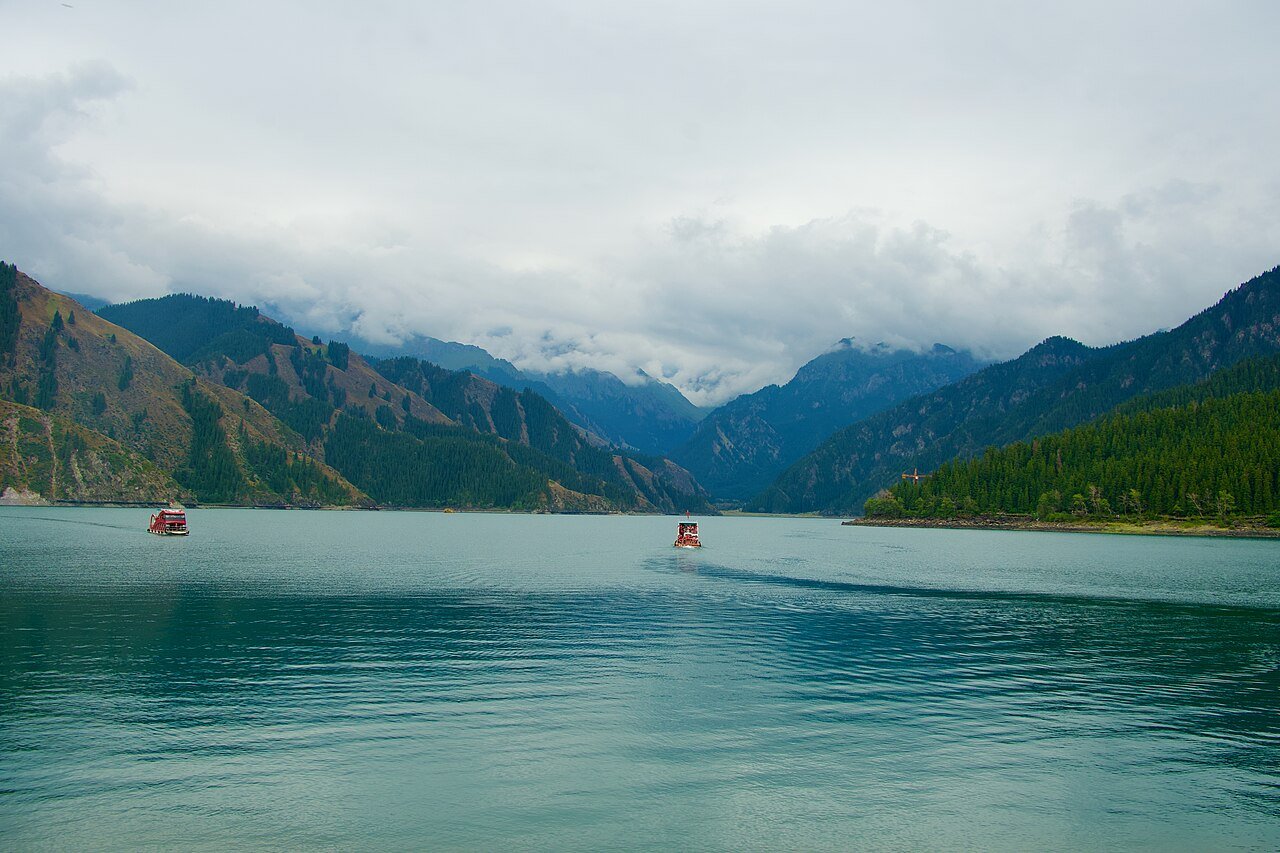
Heavenly Lake on the Tianshan is the mythical “Jade Pool” of the Queen Mother of the West: an alpine lake at nearly 2,000 metres, mirroring the snow dome of Bogda Peak. Take the cable car to the ridgeline for snow, lake and pine forest in one view.
Turpan's Grape Valley is a cool oasis at the foot of the Flaming Mountains: grape vines form shaded tunnels hung with dozens of varieties. Don't skip Jiaohe, the two-thousand-year-old “ruined city” that is one of the most haunting archaeological sites in the west.
What to Eat
Lamb skewers are Xinjiang's national street food: big chunks of mutton on iron or red-willow sticks, dusted with cumin and chilli, charred over coals until the fat sizzles. Eat them hot at the bazaar with a cold drink — that's summer done right.
Big plate chicken is the province's feast dish: chicken, potatoes and wide noodles braised in one spicy, generous pan, finished by stirring the noodles through the sauce. Pilaf is the festival staple: lamb, carrot and raisins steamed into glossy rice — pair it with a fresh onion-and-tomato salad to cut the richness.
Folk Customs
Practical Tips
Photos: Kanas Lake, Heavenly Lake on the Tianshan — via Wikimedia Commons, CC-licensed. Licenses and authors available on the original file pages.