Ningxia is one of China's smallest regions, yet it packs a desert, the Yellow River, the Helan Mountains and the ruins of a lost dynasty into one small corner of the map. The river bends here into a lush frontier garden, while the dunes of the Tengger Desert stop right across the bank — a three-day route that crosses a thousand years.
What to See
Shapotou is where the Tengger Desert slides into the Yellow River: climb the giant dunes, toboggan down the sand, then drift downstream on a traditional sheepskin raft — one of China's strangest and most beautiful landscapes.
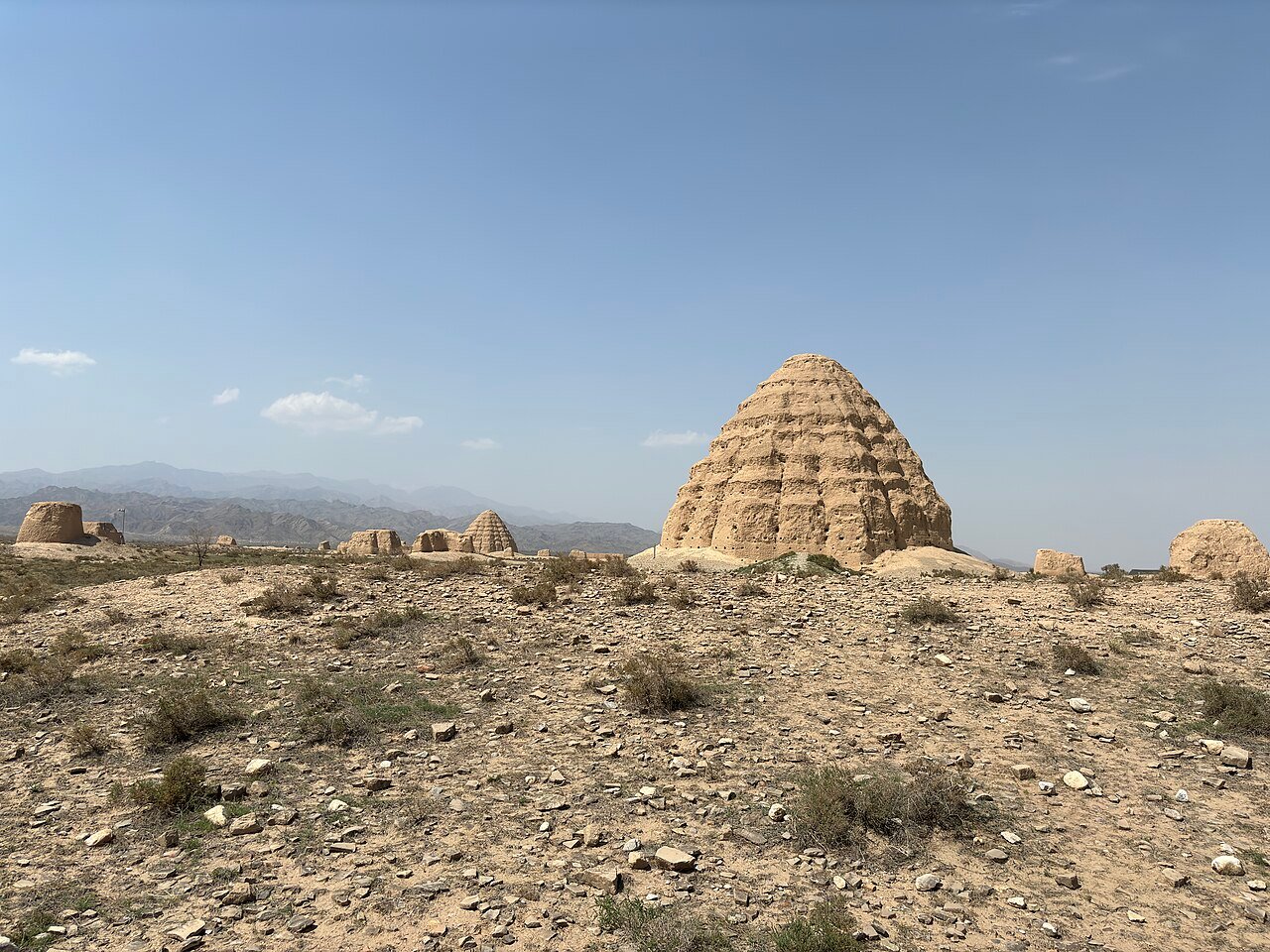
The Western Xia Imperial Tombs, known as the “pyramids of the east,” lie at the foot of the Helan Mountains — nine imperial tombs and more than two hundred attendant graves from the mysterious Western Xia dynasty. The on-site museum even shows the Tangut script, a square written language used nowhere else.
Helan Mountain rock art preserves tens of thousands of petroglyphs — running animals, sun symbols, hunting scenes — some dated as early as ten thousand years ago. In the morning light the carvings seem as fresh as the day they were cut.
What to Eat
Hand-grabbed mutton is Ningxia's signature: lamb boiled in nothing but water and salt, dipped in garlic and vinegar. Raised on the Yellow River floodplain, the meat is tender and clean, with no gamey edge.
Eight-treasures tea is the Hui host's first cup of welcome: goji berries, red dates, longan, rock sugar and raisins in a lidded bowl, refilled as you drink until it turns sweet and amber. Zhongning county is China's goji capital — a bag of dried berries is the most practical souvenir you can carry home.
Folk Customs
Practical Tips
Photos: Shapotou dunes, Western Xia Imperial Tombs — via Wikimedia Commons, CC-licensed. Licenses and authors available on the original file pages.