Mutianyu Great Wall: Cable Car Up, Wall Walk, Sunset Down
Half the crowds of Badaling, none of the beauty lost. Ride the cable car up, walk the parapet, come down at dusk — when the setting sun lights the watchtowers one by one, you will understand why it is called the Great Wall.
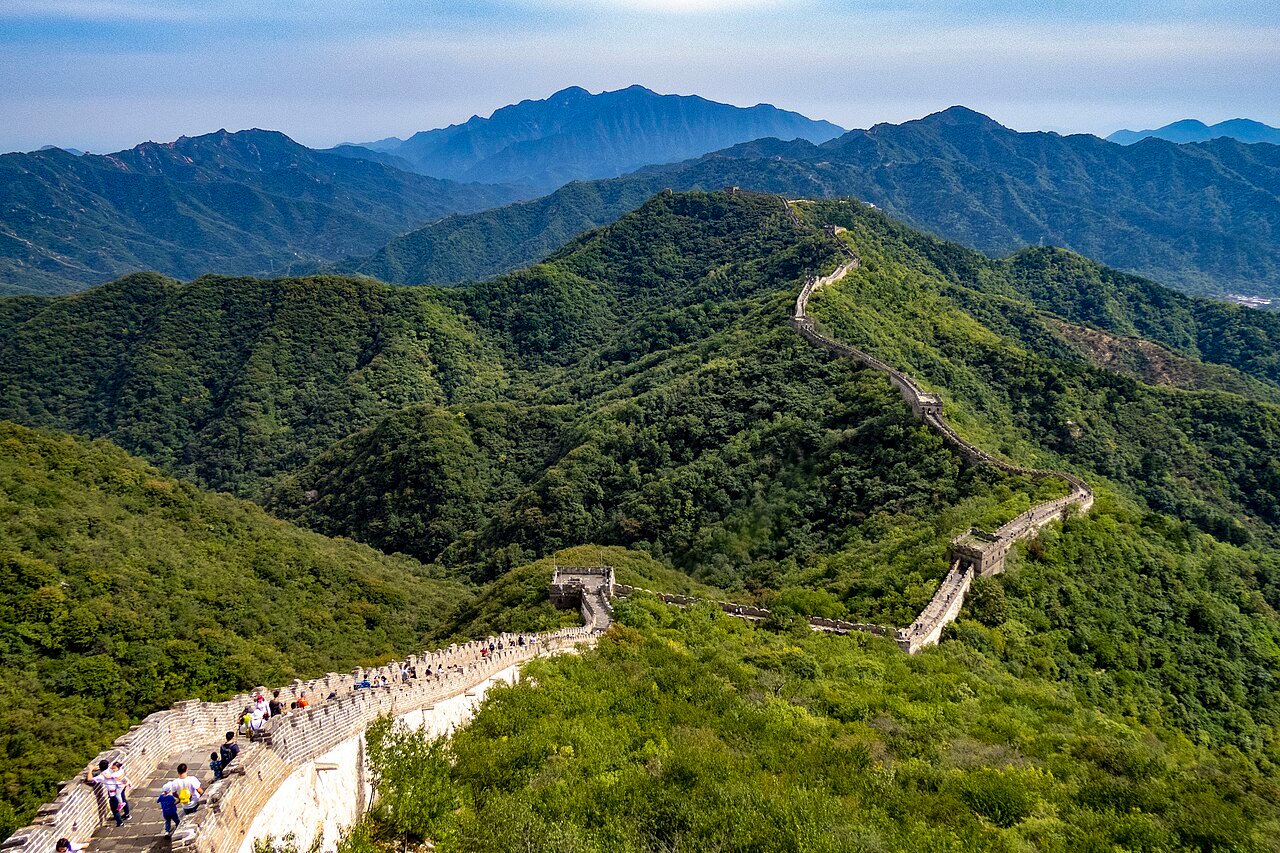
Mutianyu (慕田峪, Mùtiányù) sits in Huairou District, about 70 kilometres from central Beijing. It is not the most dramatic stretch of the Great Wall, but it is the friendliest one for a first visit: the wall is handsomely restored, the watchtowers come one after another, a cable car removes most of the climbing, and the crowds are a fraction of Badaling's. The official slogan gets it about right — "of all the ten-thousand-li wall, Mutianyu stands alone in beauty."
Here is the short version: if you will only ever climb the Great Wall once, Mutianyu is the stretch you are least likely to regret.
1. Why Mutianyu 凭什么
It is a stretch with a pedigree. Mutianyu links Juyongguan Pass in the west with Gubeikou in the east — a strategic hinge on the Ming dynasty's northern line. It was built under the command of Xu Da, one of the Ming founder's leading generals, and its pass was formally established in 1404. The rest of its timeline runs like this:
- 1404 — the Mutianyu pass is established.
- 1983 — with State Council approval, restoration of the Mutianyu wall begins. The smooth, solid walkway under your feet today dates from that campaign, not from the Ming.
- 1987 — the Great Wall, Mutianyu included, is inscribed on the UNESCO World Heritage list.
- 2000 — the section is redeveloped as a scenic area.
- 2011 — rated a national 5A-level scenic area, the top tier in China's grading system.
- 2014 — as an APEC summit infrastructure project, the Mutianyu service area opens. The shuttle buses, cable car, parking and restaurants largely date from this.
It has a structure you will not see elsewhere. Count from the east: Watchtower 1 is the Great Corner Tower (大角楼), a high point of the eastern run; Watchtower 4 is Zhengguantai (正关台) — three watchtowers standing side by side on a single platform, a configuration that is genuinely rare along the entire wall. Zhengguantai was the pass's main gate, where the wall from both directions meets; stand on it and you can watch the wall snake away in two directions at once. To the northwest, the most notorious names in all of Great Wall lore — Niujiaobian, Jiankou, Yingfeidaoyang — run along that same ridge. They are unopened wild wall: look, photograph, and do not climb.
Why it beats Badaling. Badaling wins on fame and loses to it. At Mutianyu the masonry is in excellent condition, the towers are dense, and the gradients are kinder — you will not be wrecked by the end of the day. More practically, there are far fewer people, so finding a stretch of wall with nobody else on it is entirely realistic.
2. Before you go 行前必读
Opening hours
- High season (16 March – 15 November): Monday to Friday 7:30–18:00; Saturday and Sunday 7:30–18:30.
- Low season (16 November – 15 March): 8:00–17:30.
- Ticket sales stop one hour before closing; entry closes half an hour before closing. The cable car runs to the same hours as the park.
- Note the official caveat: in weather that makes machinery unsafe to run — thunder, rain or snow, hail, fog, high wind — the site may close or partly close at short notice. Check the official notices before you set out.
Refunds and changes — a booked ticket that has not been scanned can be refunded or rescheduled through the booking platform until 24:00 on the day of the visit. After that it cannot be changed, and you cannot enter. Refunds are returned to the original payment method within about seven working days.
Prices (official booking system, September 2026)
| Item | CNY |
|---|---|
| Standard admission · adult | 40 |
| Standard admission · student / non-Beijing resident aged 60+ / military, fire and rescue personnel | 20 |
| Standard admission · Chinese nationals aged 18 and under | free |
| Standard admission · Beijing ID holders aged 60+ | free |
| Shuttle bus (service area to scenic area) | 15 |
| Cable car · round trip | 140 |
| Cable car · one way | 100 |
| Combo: postcard admission + shuttle bus + cable car round trip · adult | 200 |
| Great Wall Spirit Heritage Hall · guided ticket | 30 |
Two footnotes matter. First, these admission rules cover the wall ticket only — shuttle bus, cable car, chairlift, toboggan and everything else inside the site are extra. Plenty of visitors assume CNY 40 gets them up the wall, then discover they still need the shuttle and the cable car. Second, for the shuttle bus and cable car, children 1.2 metres and under ride free; everyone over 1.2 metres pays full fare, and there is no discount for children, seniors or disabled visitors on those two.
3. Getting up: three ways, one trap 怎么上山
There are three ways up: the cable car (缆车), the chairlift plus toboggan (索道 + 滑道), and on foot. Here is the trap almost every guide omits:
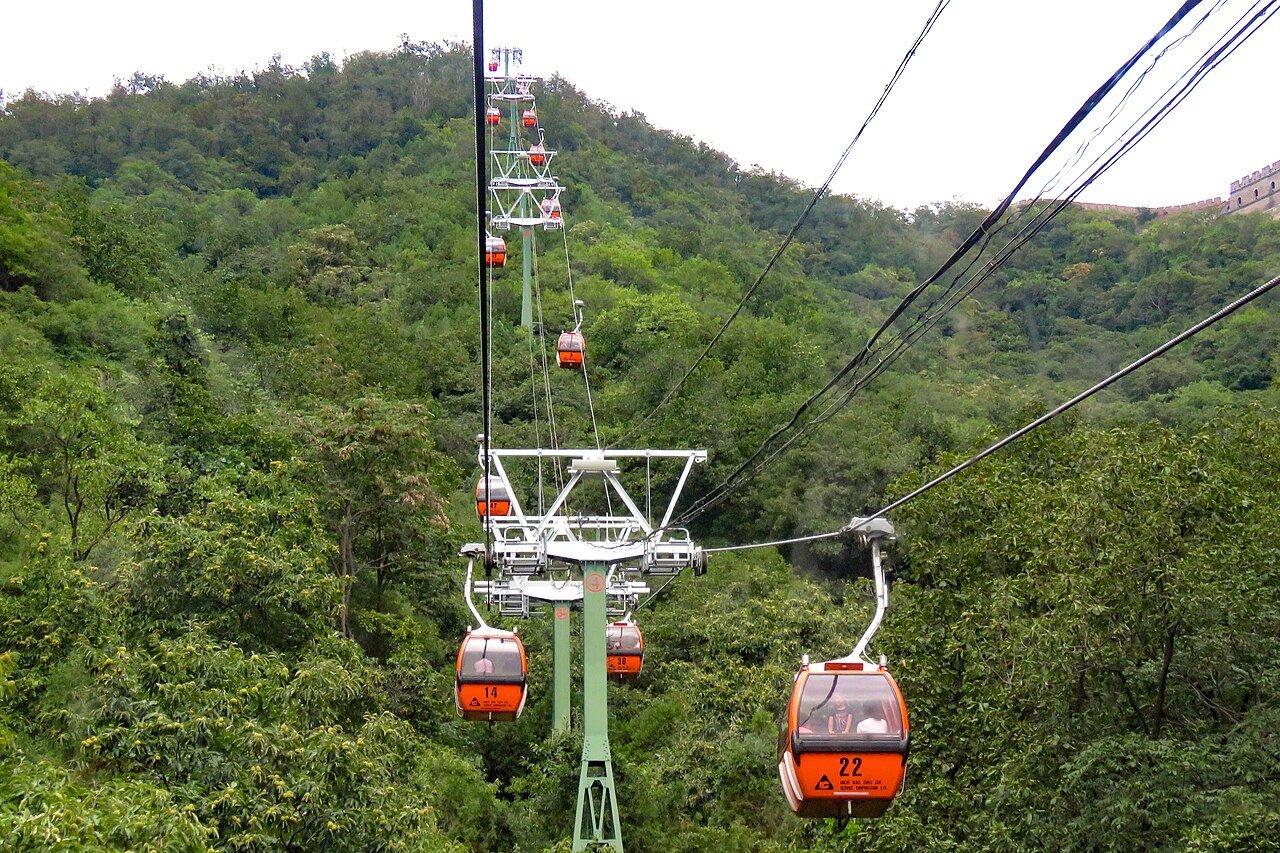
Budget for the shuttle bus, too. The service area station sits roughly 3 kilometres from the admission checkpoint — six kilometres round trip — and the official advice is explicit: take the shuttle. So before you even reach the ticket gate you have to solve those three kilometres. For most people the answer is shuttle bus plus cable car, saving all your stamina for the wall itself.
If you plan to walk: the steps on the wall vary wildly in height and width, and the route rolls up and down without mercy. The cumulative climb over a day is real. After one full walk you will understand exactly why the cable car exists.
4. Walking the wall 墙上怎么走
- The day session opens Watchtowers 1–20; the night session opens Watchtowers 10–15. If you want the whole run, start early.
- The usual approach is to fan out from the middle: take the cable car up to the mid-section ridge, walk west toward Zhengguantai (Watchtower 4) — mostly downhill out, uphill back — then turn around and head east for the heights and the Great Corner Tower (Watchtower 1), and finish down by cable car or toboggan.
- Do not over-schedule it. Mutianyu rewards stopping, not checkpoint-counting: an empty stretch of parapet, a watchtower you can walk into, a ridge line that suddenly opens out. Those are worth more than two extra towers.
- Allow 3–4 hours at a comfortable pace including the travel up and down; two hours is enough if you only walk the highlight stretch.
5. What is worth stopping for 值得停下来的点
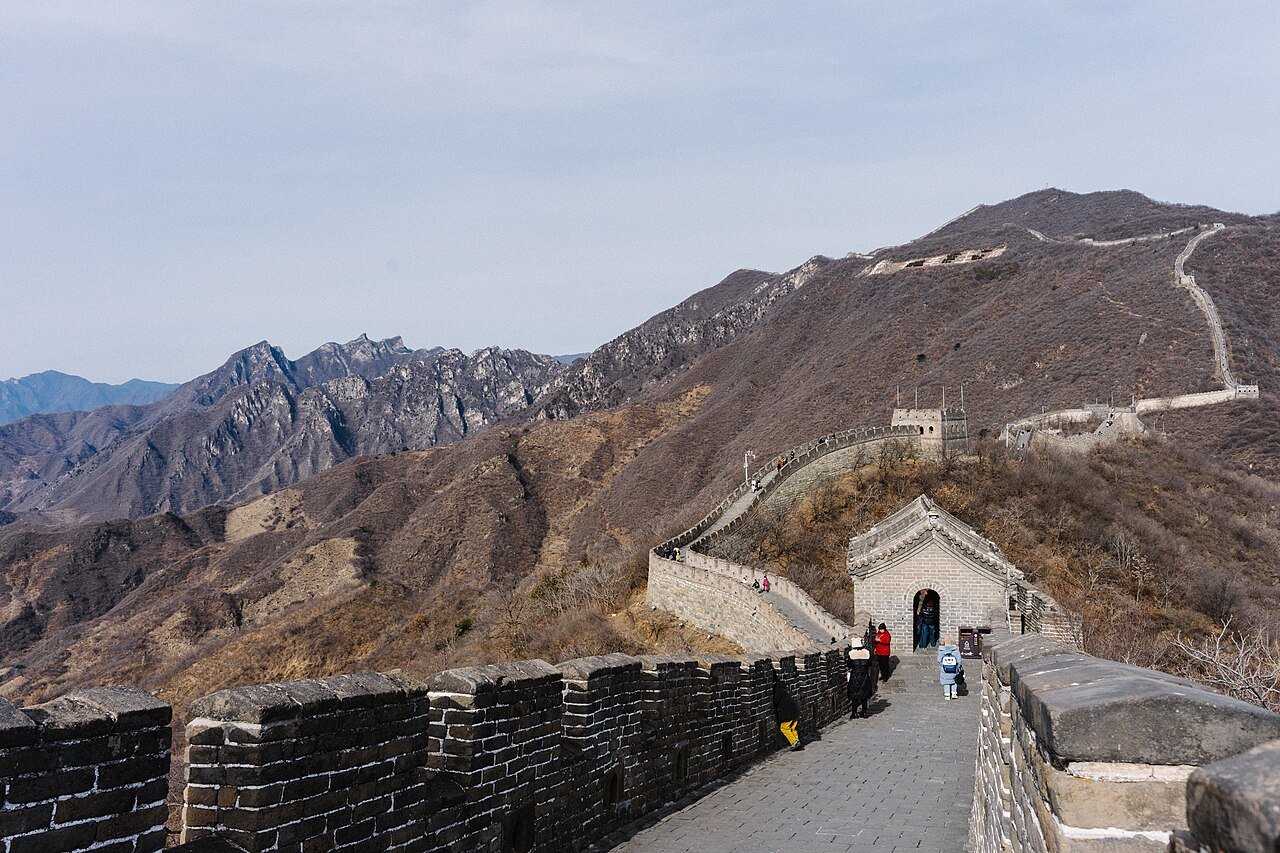
Zhengguantai · Watchtower 4 — three watchtowers on one platform, the single most irreplaceable thing at Mutianyu. This was the pass's main gate, where the wall from both directions converges. Standing on it, the wall unrolls in two directions at once. If anywhere here feels like a frontier, it is this.
Great Corner Tower · Watchtower 1 — one of the high points of the eastern run. Looking back from here you get the full sweep of the wall stepping away along the ridge; it is the photograph people come for.
Inside the towers — do not just walk the top. The watchtowers contain arched doorways, arrow windows, and the fabric of signalling and shelter. Step inside one for a minute and the word "watchtower" stops being decoration: it is a small building you could sleep in, store in, and fight from.
The two faces of the wall — one side carries high crenellations, facing outward, for soldiers to shelter behind; the other is a low inner wall. Walk a hundred metres and you have felt the logic: this wall has a front and a back.
The northwestern ridges — Niujiaobian, Jiankou, Yingfeidaoyang: the most fearsome names on the whole wall live out there. They are unopened and climbing them is prohibited. Use your eyes and a long lens instead.
6. Should you do the night tour? 夜长城
Mutianyu also opens at night. The official ticketing has a separate night wall booking page, and the night session covers Watchtowers 10–15 (the day session covers 1–20). Floodlighting draws the towers out one by one — a version of the wall you simply cannot see by day.
Two things to know first. The night tour is a seasonal product and can be cancelled at short notice for events or weather — the scenic area has issued public notices cancelling it. So confirm it is running on your date before you book rather than assuming it is nightly. And bring a jacket: the ridge is much colder at night than the city.
7. Mutianyu, Badaling, or the wild wall — three sentences 怎么选
- First visit, want it easy, travelling with children or grandparents — choose Mutianyu. The shuttle and cable car solve the climbing, the wall is smooth and walkable, and the infrastructure is the most complete of any section.
- You want the most famous stretch — that is Badaling. Be ready for crowds and for booking further ahead in high season; for many people their memory of the Great Wall is of shuffling along inside a crowd.
- You want raw, steep, empty wall — that is Jiankou and Yingfeidaoyang, unopened wild wall, where climbing is both illegal and genuinely dangerous. The best way to see it is standing on Mutianyu's wall with a long lens.
All three sentences point at the same thing: the Great Wall is not a place, it is a long line across northern China, and different sections are entirely different experiences. "I've been to the Great Wall" is never the same achievement twice.
8. Four seasons, two golden hours 四季与时段
The scenic area's own description is accurate: spring brings hillsides of wild blossom; summer is deep green with streams running; autumn buries the ridges in red leaves; winter turns the whole wall white.
- Autumn (mid-October to early November) is Mutianyu's celebrated season, and also its busiest. Book ahead and aim for a weekday.
- Spring (April–May) — blossom and new green, comfortable temperatures, fewer people.
- Summer (June–August) — lush, but afternoon storms are common and thunder can force a temporary closure. Bring rain gear.
- Winter (December–February) — the fewest visitors and the most beautiful snow, but the low season closes at 17:30 with sales stopping around 16:00, and the wind and ice are serious. Dress properly.
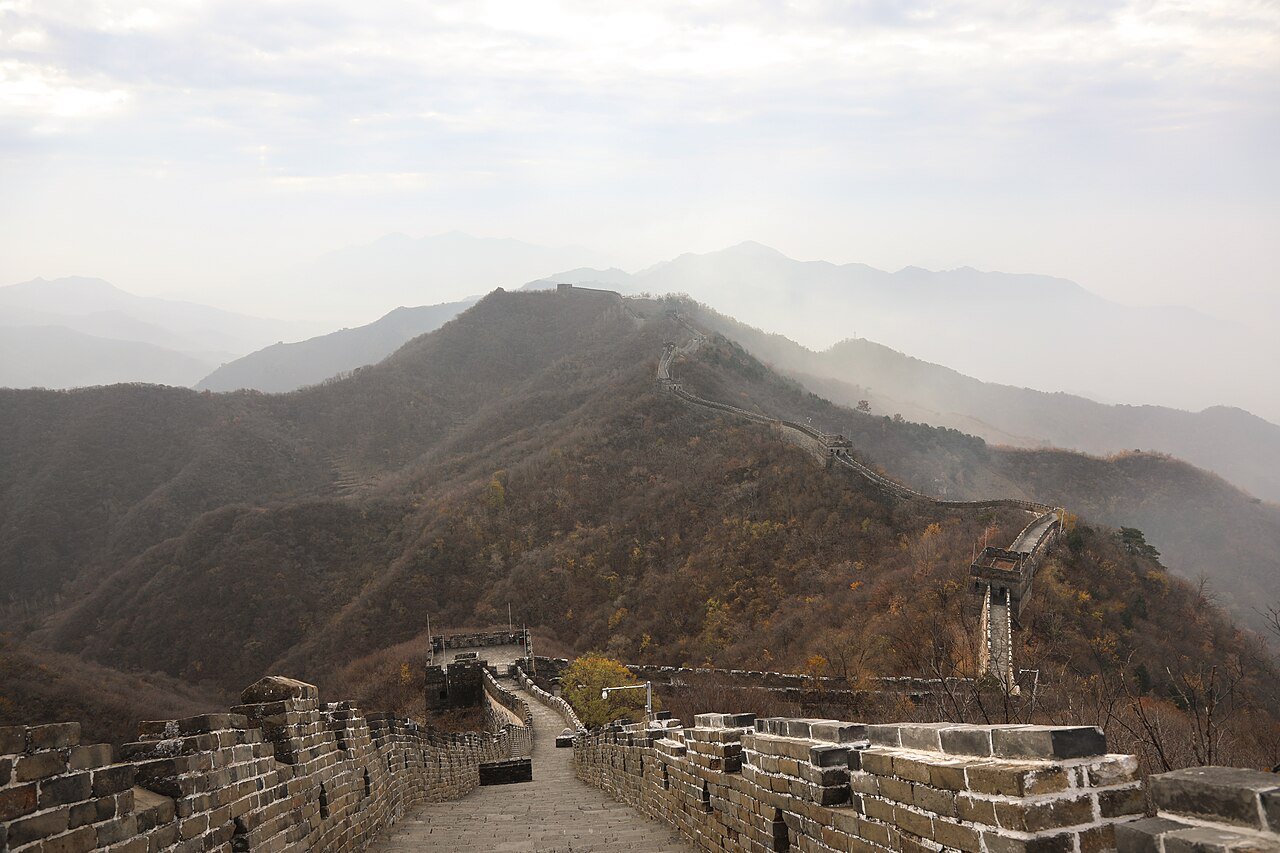
The two golden windows in a day: the first is the moment the gates open, when the light rakes across the masonry and there is almost nobody there. The second is the last one to two hours before closing, when the tour groups drain away, the sun drops, and the watchtowers begin to throw long shadows. That is what "come down at dusk" means. The days to avoid are equally clear: weekends, the National Day holiday week, and weekends during the red-leaf season.
9. The foreign visitor's checklist 给外国朋友的清单
- Documents: original passport. The same one for booking and for entry — a copy will not scan.
- Booking channel: official only (the scenic area's official website or its official WeChat mini-program). Do not buy "skip the queue" or marked-up tickets from social platforms.
- Payment: WeChat Pay and Alipay both link to international cards now, which covers the shuttle, cable car and food; still carry a little cash as backup.
- Getting there: about 70 km from central Beijing — most visitors use a hired car, a ride-hailing car, or a tourist shuttle. If you drive, park at the service area and switch to the shuttle bus.
- Gear: trainers or hiking shoes (the steps are uneven — not new leather soles), a windproof layer, water, sun protection; add grip in winter.
- Etiquette and rules: no writing, carving or pasting anything on the wall; no open flame, no smoking, and no pets inside the site; do not climb the crenellations or run along the parapet. For many Chinese visitors the Great Wall is a lifelong wish — do not be the person who gets stopped by staff.
- Weather: in thunder, rain, snow or high wind the site may close or partly close. Check the official notices the morning you go.
- Useful numbers: tickets 010-61626894 / 010-61626505 ext. 869; group and marketing 010-61626022; complaints 010-61626873; rescue 010-61626537.
One last thing. Mutianyu is not the steepest or the oldest stretch of the Great Wall. It is very probably the best one to climb for the first time — well preserved, genuinely walkable, with a view that goes on, and enough empty wall that you can find a stretch with only you on it.
Walking down at dusk, turn around once. The setting sun lights the watchtowers one at a time, and the wall stops being a piece of architecture.
Photos: the wall from Watchtower 20 and the Mutianyu cable car by N509FZ; the wall at Mutianyu by Lloyd Tudor; late autumn on the ridge by Francesco Bini — all via Wikimedia Commons, CC BY-SA 4.0. Hours, prices and booking rules checked against the Mutianyu Great Wall official site, its visitor notices and its official booking system (September 2026). Written by the China Cultured editorial desk.