Anhui lies in the deep south of the Yangtze, half the strange peaks and seas of cloud of Huangshan, half the white walls and black tiles of Huizhou. This is where the great Huizhou merchants set out from, and the homeland of Xuan paper, Hui ink and She inkstones.
What to See 好玩的
Huangshan is the mountain that outshines them all — strange pines growing from bare granite, bizarre rocks, and seas of cloud rolling below the summits. The classic move: arrive the night before, climb before dawn, and watch the sunrise from Lotus Peak or the Beginning-to-Fly Rock. In autumn the maple colours and the cloud sea are at their best; in winter the peaks turn to ice and glass.
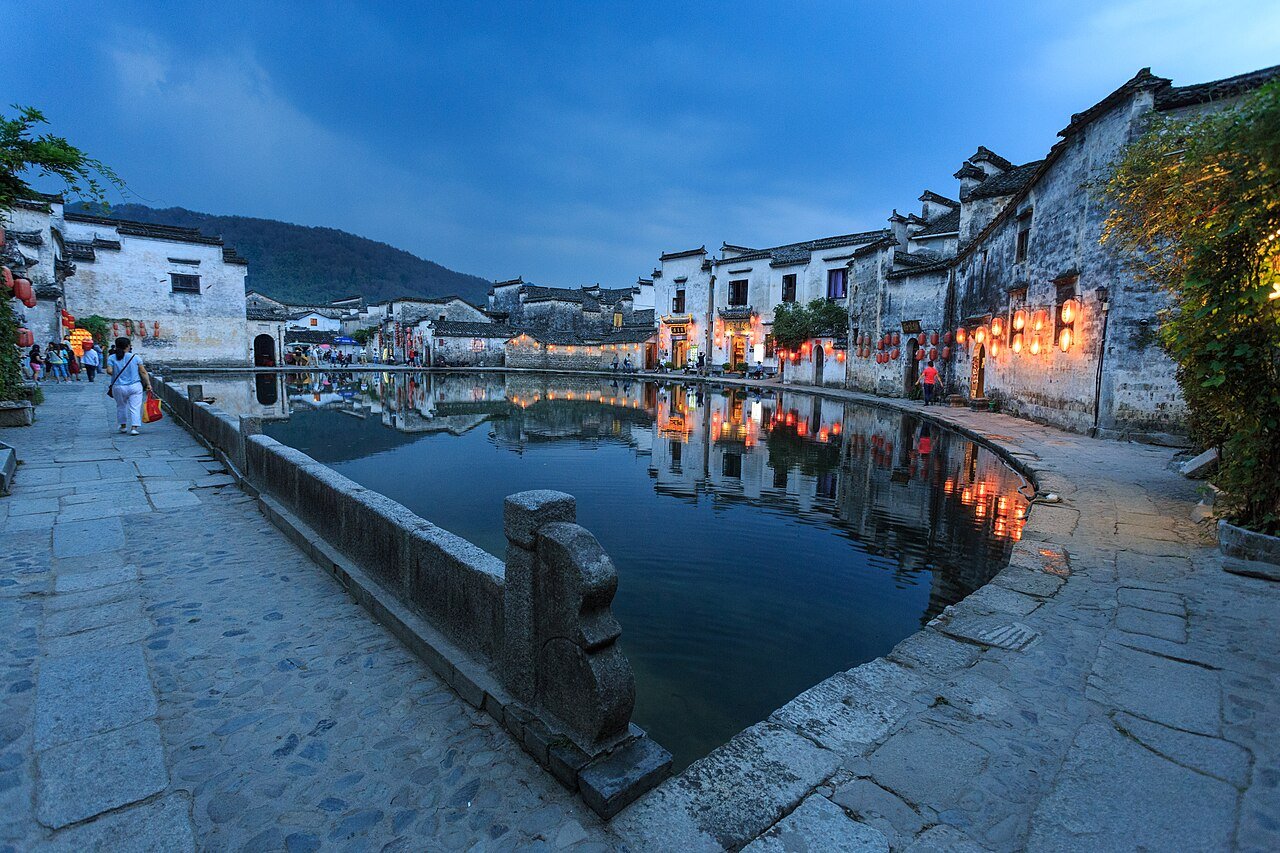
Hongcun is the village from a painting: the Moon Pond reflects white walls, black tiles and green hills, and the whole village was laid out in the shape of an ox — the pond its stomach, the lanes its intestines. Arrive at dawn or dusk, when the light is soft and the tour groups are gone.
Xidi, half an hour away, is quieter still. Its Ming and Qing ancestral halls and memorial archways are the finest in Huizhou; walking its lanes is walking into the seventeenth century.
What to Eat 好吃的
Stinky mandarin fish is the proudest reversal in Huizhou cuisine: the fish is salted and left to ferment until it “smells,” then braised with chilli, ginger and soy. The aroma outside is a dare; the flesh inside is tender, savoury and unforgettable.
Hairy tofu is bean curd fermented until a white fuzz grows on its surface, then pan-fried golden and served with a dipping sauce of chilli and spring onion — crisp outside, custard-soft inside. And on the way down the mountain, pick up Huangshan biscuits: crisp pastry around dried vegetable and minced pork, baked deep gold. They keep for weeks and travel well — the taste of the climb, in your bag.
Folk Customs 民间习俗
Photos: Huangshan, Hongcun — via Wikimedia Commons, CC-licensed. Licenses and authors available on the original file pages.